
24/7 Locksmith Service
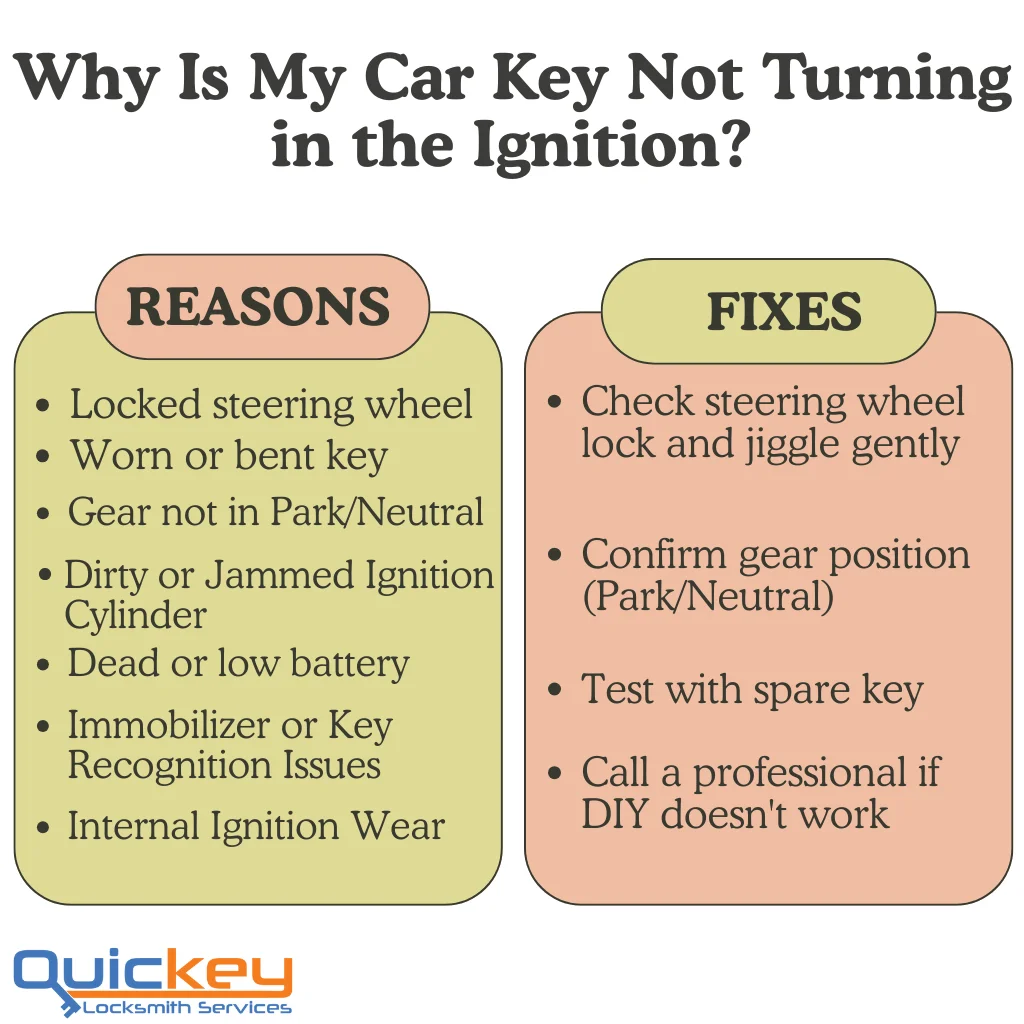
Infographic summarizing common reasons why a car key won't turn in the ignition (locked steering wheel, worn key, gear not in Park/Neutral, dirty cylinder, low battery, immobilizer issues, internal wear) and quick fixes (check steering wheel lock and jiggle, confirm gear position, test spare key, call professional if DIY doesn't work)

Why Is My Car Key Not Turning in the Ignition?

If your car key isn’t turning in the ignition, you’re not alone. Many drivers wonder, “Why won’t my car key turn in the ignition?”

First, don’t panic, this is a common problem and can happen to anyone. Understanding the reasonsbehind it will help you stay calm. There are several reasons why this problem occurs and multiple safe ways to fix it.

In this guide, we’ll cover everything you need to know, from common reasons to practical fixes, and when it’s best to call a professional locksmith if DIY methods don’t work. By the end, you’ll know exactly how to handle this situation with confidence and avoid panic next time.

Table of Contents

How Car Key and Ignition Work

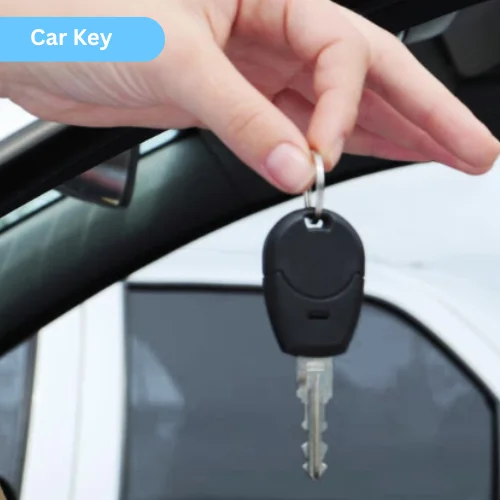
Photo of a hand holding a black car key with metal blade in front of a car interior.

How the Car Key Works

The car key is more than just a piece of metal. Modern keys often include transponders or chips that communicate with your vehicle’s security system. When inserted into the ignition, the key aligns with the ignition cylinder, allowing you to turn the ignition and start the car.

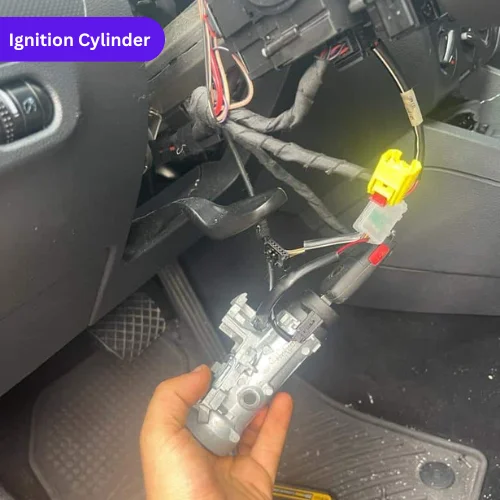
Photo of a hand holding a removed ignition cylinder from a car, showing the key slot and internal mechanism, with the dashboard and wiring visible in the background.

The Ignition Cylinder

The ignition cylinder is the mechanical part where the key is inserted. Inside, pins or tumblers match the cuts on the key. If the correct key is used, the cylinder rotates, sending a signal to the starter motor to start the engine.

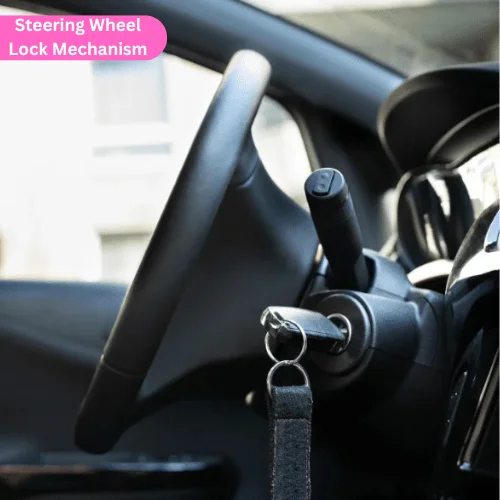
Photo of a car dashboard showing the steering wheel, ignition with a key inserted, and gear shifter, illustrating the steering wheel lock mechanism.

Steering Wheel Lock Mechanism

Many vehicles include a steering wheel lock for safety. When the steering wheel is turned after the key is removed, it may lock in place. To start the car, the key and ignition cylinder must unlock this mechanism first.

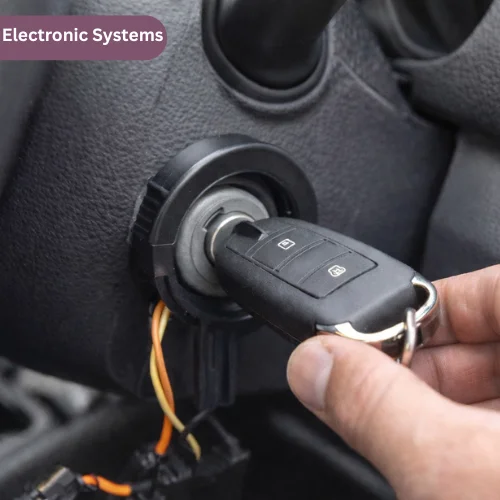
Photo of a hand inserting a flip-style car key fob into the ignition slot on a dashboard, illustrating electronic systems in modern vehicles.

Electronic Systems

Modern cars often use immobilizers and electronic ignition systems. The key communicates with these systems via a chip. If the system doesn’t recognize the key, the ignition may not turn, preventing the engine from starting.

How Everything Works Together

When you insert the key and turn it:

  • The cylinder aligns with the key

  • Pins or tumblers allow rotation

  • Steering lock disengages (if engaged)

  • Electronic signals are sent to the starter motor and immobilizer system

  • Engine starts once all components work correctly

Understanding these components helps you see why problems occur when your key won’t turn, and it sets the stage for the next section on common reasons.

Common Reasons Your Car Key Isn’t Turning in the Ignition

If your car key isn’t turning in the ignition, the issue is usually caused by a mechanical lock, a worn component, or a safety system doing its job. Below are the most common reasons explained clearly, so you can identify what’s stopping the key from turning

Steering Wheel Lock Engaged

One of the most common reasons is a locked steering wheel. This happens when the wheel is turned after removing the key, causing a safety lock to activate. When this lock is engaged, the ignition cylinder won’t rotate.

This issue often feels like the key is completely stuck, even though nothing is broken.

Worn or Bent Car Key

Over time, car keys wear down. Frequent use, pressure, or dropping the key can slightly bend it or wear its grooves. Even small changes in shape can prevent the ignition pins from aligning correctly.

If the key looks damaged or feels loose in the ignition, this may be the cause.

Dirty or Jammed Ignition Cylinder

Dust, dirt, or internal wear inside the ignition cylinder can block movement. When the internal pins don’t move freely, the key cannot turn smoothly or may not turn at all.

This issue often develops gradually and may start with stiffness before becoming a complete blockage.

Vehicle Not in Park or Neutral

Automatic vehicles are designed not to start unless the gear selector is fully in Park or Neutral. If the shifter is slightly out of position, the ignition system may prevent the key from turning.

This is a common safety feature and is often overlooked.

Frozen or Tight Components (Cold Weather)

In colder temperatures, metal components can contract, and moisture inside the ignition can freeze. This can make the ignition feel stiff or completely locked.

Cold weather issues are usually temporary but can make the problem feel more serious than it is.

Immobilizer or Key Recognition Issues

Modern vehicles use electronic immobilizer systems to prevent unauthorized starting. If the system doesn’t recognize the key’s chip, the ignition may stay locked or fail to turn.

This can happen due to key programming issues, electronic faults, or interference with the signal.

Internal Ignition Wear

Ignition systems wear down with age. Springs, pins, and internal parts may no longer move correctly, especially in high-mileage vehicles. When wear reaches a certain point, the key may stop turning altogether.

This issue typically worsens over time rather than happening suddenly.

Why Identifying the Cause Matters

Understanding the exact reason your car key isn’t turning helps you decide what to do next. Some issues are simple and temporary, while others require careful handling to avoid damaging the ignition or key.

Steps to Take If Your Car Key Isn’t Turning

When your car key isn’t turning in the ignition, the most important thing is to stay calm and avoid forcing it. Applying too much pressure can damage the key, the ignition cylinder, or both. Instead, follow these simple and safe steps to identify the issue without causing further problems.


First, make sure the steering wheel is not locked. Turn the steering wheel gently left and right while lightly turning the key. Many modern vehicles have a steering wheel lock that can prevent the key from turning if pressure is applied to the wheel while parking.


Next, check the position of the gear shifter. Automatic cars usually require the vehicle to be fully in Park, while manual cars must be in Neutral with the clutch pressed. Even a slight misalignment can stop the ignition from turning.


After that, inspect the key itself. Look for signs of wear, bending, or damage. A worn or slightly bent key may still enter the ignition but fail to turn properly. If you have a spare key, try using it to see if the problem is key-related.


Then, gently move the key in and out while turning it slightly. Sometimes debris or minor misalignment inside the ignition cylinder can prevent smooth movement. Avoid spraying random lubricants, as the wrong product can attract dirt and make the issue worse.


Also, make sure the battery isn’t completely dead. While a weak battery usually doesn’t stop the key from turning mechanically, some modern vehicles with electronic ignition systems may behave differently when power is extremely low.


If none of these steps work, stop trying further. Continuing to force the key can break it inside the ignition, turning a small issue into a costly repair.

At this point, it’s best to consider professional help, especially if the ignition cylinder or internal components are likely involved.

When to Call a Professional Locksmith

If your car key still isn’t turning after trying basic checks and safe fixes, it may be a sign of a deeper issue. Some ignition problems require specialized tools and experience, and forcing the key further can cause more damage.


You should consider professional help if the key feels stuck even when the steering wheel is unlocked, the ignition cylinder feels loose or jammed, or the key turns slightly but won’t fully engage. These signs often point to internal wear, damaged pins inside the ignition cylinder, or alignment problems that can’t be fixed with simple DIY steps.


Another situation where professional assistance is necessary is when the key is bent, cracked, or partially broken inside the ignition. Attempting to remove or force a damaged key can snap it completely, making the repair more complicated and costly.


Modern vehicles may also require expert attention if the issue is related to the immobilizer system or electronic ignition components. These systems are designed to prevent unauthorized starting and usually can’t be reset or repaired without proper diagnostic equipment.


Calling a professional at the right time helps prevent further damage, protects your ignition system, and ensures the problem is fixed safely rather than temporarily.

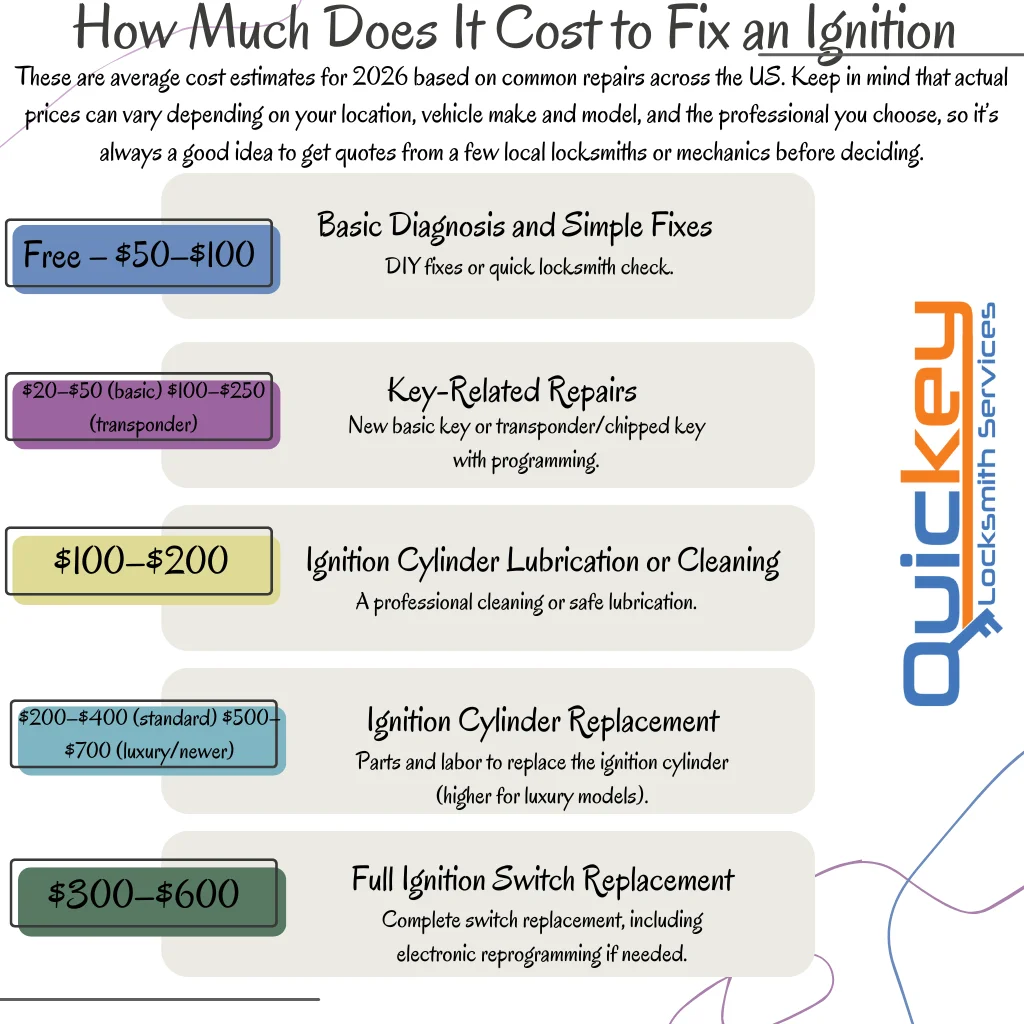
Infographic of average 2026 costs for common ignition repairs: titled 'How Much Does It Cost to Fix an Ignition'. Includes basic diagnosis and simple fixes (free–$100), key-related repairs ($20–$250), cylinder lubrication or cleaning ($100–$200), cylinder replacement ($200–$700), full ignition switch replacement ($300–$600). Prices vary by vehicle, model, and location.

How Much Does It Cost to Fix an Ignition

The cost to fix an ignition can vary depending on several factors. The type of key, vehicle’s make and model, the area where you live, and the complexity of the repair all play a role in determining how much you might expect to pay. Understanding these factors will give you a realistic estimate before seeking professional help.

Factors That Affect the Cost

Several factors can influence how much it will cost to fix an ignition. Understanding these variables will help you get a realistic estimate:

Key Type and Technology

  • Basic mechanical keys are usually the least expensive to replace or repair.

  • Transponder keys, key fobs, and smart/proximity keys involve more technology, programming, and labor, which increases the cost.

Vehicle Make, Model, and Year

  • Older vehicles may have simpler ignition systems, making repairs less costly.
  • Modern cars with electronic ignitions or advanced security features often require specialized tools and programming, raising the price.

Complexity of the Repair

  • Simple ignition cylinder issues are easier and cheaper to fix.

  • Stuck keys, worn cylinders, or electronic malfunctions require more time, skill, and sometimes additional parts, increasing the cost.

Location / Regional Differences

  • Labor rates and service fees can vary by city or region.
  • For example, repairs in Houston may cost slightly more than in Dallas or Austin due to local market rates.

Emergency or Mobile Services

  • If you need immediate assistance or on-site service, a mobile locksmith will come to your location. This usually costs more than a regular scheduled appointment at a workshop, often due to travel and urgency.

Programming Fees (if applicable)

  • Electronic keys often require reprogramming after repair or replacement.

  • Some locksmiths include this in the quoted price, while others charge separately ($50–$150 extra).

By understanding these factors, you can get a clearer picture of what to expect when fixing an ignition, and plan accordingly without surprises.

Average Cost Ranges in 2026

Fix Type

Basic Diagnosis and Simple Fixes

Key-Related Repairs

Ignition Cylinder Lubrication or Cleaning

Ignition Cylinder Replacement

Full Ignition Switch Replacement

Locksmith vs. Dealership

Description

DIY fixes or quick locksmith check.

New basic key or transponder/chipped key with programming.

A professional cleaning or safe lubrication.

Parts and labor to replace the ignition cylinder (higher for luxury models).

Complete switch replacement, including electronic reprogramming if needed.

Locksmiths are usually cheaper and faster than dealerships.

Typical Cost Range

Free – $50–$100

$20–$50 (basic) $100–$250 (transponder)

$100–$200

$200–$400 (standard) $500–$700 (luxury/newer)

$300–$600

Locksmith: $150–$400 Dealership: $400–$800

These are average cost estimates for 2026 based on common repairs across the US. Keep in mind that actual prices can vary depending on your location, vehicle make and model, and the professional you choose, so it’s always a good idea to get quotes from a few local locksmiths or mechanics before deciding.

.

Conclusion

By now, you have a complete picture of why your car key might not turn in the ignition and exactly what to do when it happens. Most cases boil down to a few common, non-serious causes, like a locked steering wheel, the shifter not fully in Park or Neutral, a worn or dirty key, or minor buildup inside the ignition cylinder. With the simple troubleshooting steps we covered, you can often solve the problem yourself in just a few minutes, without spending a single dollar.


When those basic checks don’t work, it’s usually a sign of normal wear or an electronic safety feature doing its job. Instead of forcing the key and risking damage (or even breaking it inside the cylinder), the smart move is to stop and get professional help. An experienced automotive locksmith can diagnose and fix the issue quickly and safely, saving you time and money in the long run.


A little regular care can help you avoid this hassle altogether: keep a spare key in a safe place, don’t overload your keychain with heavy items, and consider having the ignition cylinder cleaned or lubricated during routine vehicle maintenance.


The bottom line is simple—this is a very common car problem that almost every driver faces at some point. Now you’re equipped with the knowledge to handle it calmly and correctly, whether you fix it yourself or know when to call in an expert. Next time it happens, you’ll be back on the road faster and with a lot less stress.

Safe driving!

FAQ

Yes, especially in newer cars with electronic ignition systems. A weak or dead battery may not provide enough power to release the electronic lock in the ignition, even if the key fits and doors unlock. Dashboard lights are often dim or off too.

Try jump-starting the car. If the key turns normally once power is restored, the battery was the problem. Replace or recharge it as needed.

Yes, it can. Cold temperatures can freeze moisture inside the cylinder or cause metal parts to contract, making the key harder to turn. If it happens often, have the cylinder checked for moisture buildup.

Fixing a faulty ignition switch (the electrical part behind the key cylinder) usually involves replacement, as repair is rarely possible. Typical cost is $250–$500 for most vehicles, including parts and labor.

Newer or luxury models can range $500–$800 or more due to electronic components and reprogramming.

Prices vary by make, model, and location. Always get a few quotes.


If the key snaps off inside the ignition, stop trying to turn or remove it yourself. Further attempts can push the broken piece deeper or damage the cylinder. Keep the steering wheel and gear in their current position to avoid engaging locks. Call a professional automotive locksmith as soon as possible. They have the right tools to safely extract the broken key and can make a new one on site. Trying DIY methods often makes the repair more expensive.

Even with a new car battery, the key may not turn if the issue is mechanical (worn key, dirty or damaged ignition cylinder, steering lock, or gear position). The battery mainly affects electronic systems like the immobilizer or dashboard lights.

Check the steering wheel lock by gently jiggling the wheel while turning the key. Ensure the car is fully in Park or Neutral. Try your spare key to rule out a worn main key. If these don’t work, the problem is likely in the ignition cylinder itself and needs professional attention.