No. Locksmiths can open most standard house doors (cylinder, deadbolt, knob, mortise, smart locks) without damage. But high-security, ultra-damaged, or special proprietary locks may need drilling or full replacement.

Yes, a locksmith can open a house door in most cases, even when you have no keys, the lock is jammed, or the key is broken inside.
Professional locksmiths are trained to handle these situations safely and quickly. They use special skills and tools to unlock the door without causing damage to the lock or the door itself in the vast majority of cases. This is why people call them when they get locked out of their own home.
The process is usually simple and straightforward. A locksmith arrives, checks the type of lock, chooses the right method, and gets the door open in minutes. No need to break windows or force the door. That’s not how professionals work.
But how exactly do they do it? What tools do they use? And how much does it actually cost? These are the things most people want to know before calling anyone.
In the next sections, we will look at the common methods locksmiths use to open house doors, the types of locks they can handle, and the typical costs involved so you know exactly what to expect.
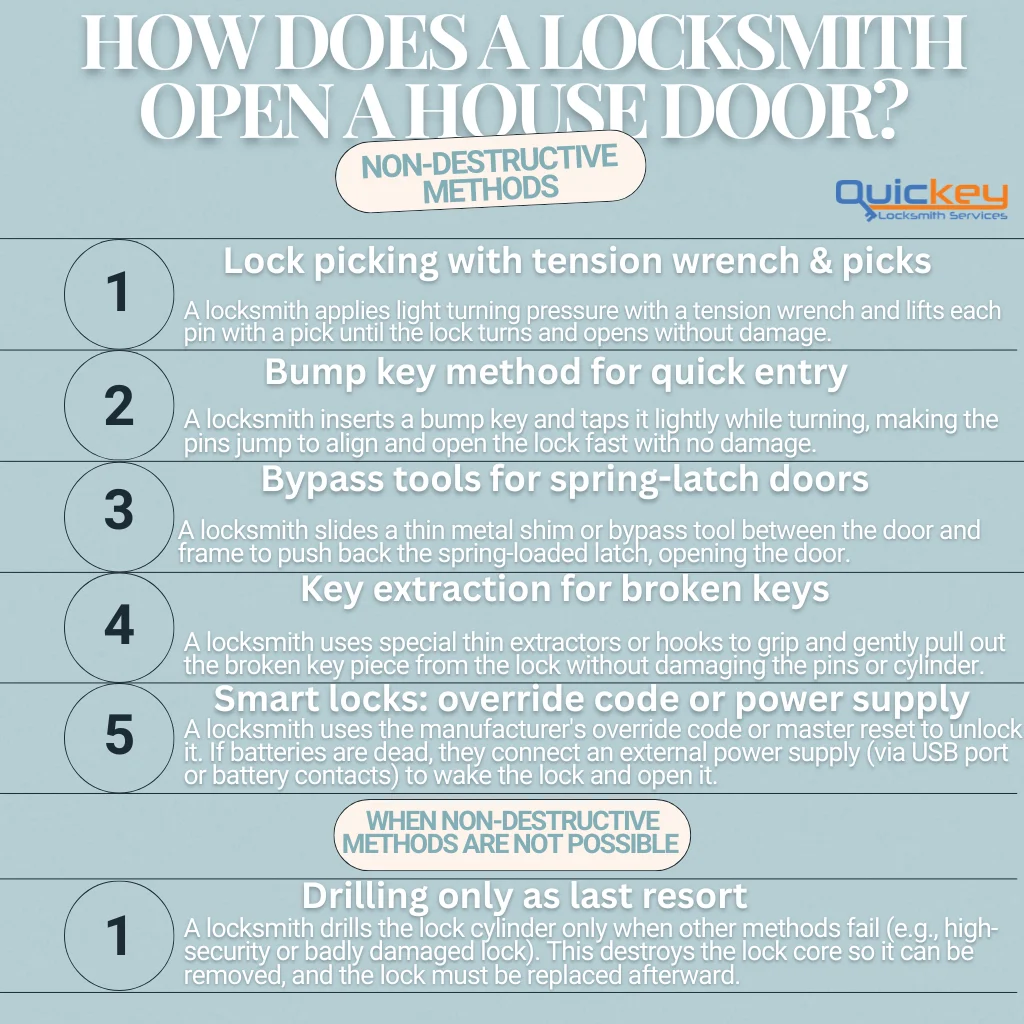
A locksmith opens a house door by using specialized tools and techniques to manipulate the lock mechanism without needing the original key. The goal in almost every case is to achieve entry without damaging the lock, the door, or the frame.
The method chosen depends on the type of lock, its condition, and whether the key is lost, broken inside, or simply not available. Most residential doors use pin-tumbler locks, and these can usually be opened non-destructively.
The locksmith inserts a tension wrench into the bottom of the keyhole to apply light turning pressure. Then a pick tool is used to lift each pin inside the lock to the correct height (the shear line). When all pins are set, the cylinder turns and the door opens. This is the most common professional method for standard cylinder locks and deadbolts. It requires skill and practice but leaves no marks when done correctly.
A specially cut “bump key” is inserted into the lock. The locksmith taps the end of the key lightly with a small hammer or tool while applying turning pressure. The shock causes the pins to jump momentarily to the shear line, allowing the lock to turn. This works on many basic pin-tumbler locks and is very fast when it succeeds.
For doors with spring-latch (push-latch) mechanisms, a thin metal shim or bypass tool is slid between the door and the frame to push the latch back. This method only works on certain older knob-style locks or doors where the latch is accessible. It does not work on deadbolts.
A blank key is inserted and gently turned while being moved slightly. Marks left on the blank by the pins are filed down, and the process is repeated until the key turns the lock. This is slower but useful when no other method works and the locksmith wants to create a working key.
Some locks have sidebars or additional wafers. A locksmith uses a decoding tool to read the internal components and cut a key accordingly. This is more specialized and takes longer.
If the lock is severely damaged, the pins are seized, or it is a very high-security model with anti-pick features, the locksmith may have to drill the lock cylinder. Drilling destroys the lock core so it can be removed and replaced. This is considered a last resort because it requires installing a new lock afterward. Most everyday residential locks do not reach this stage.
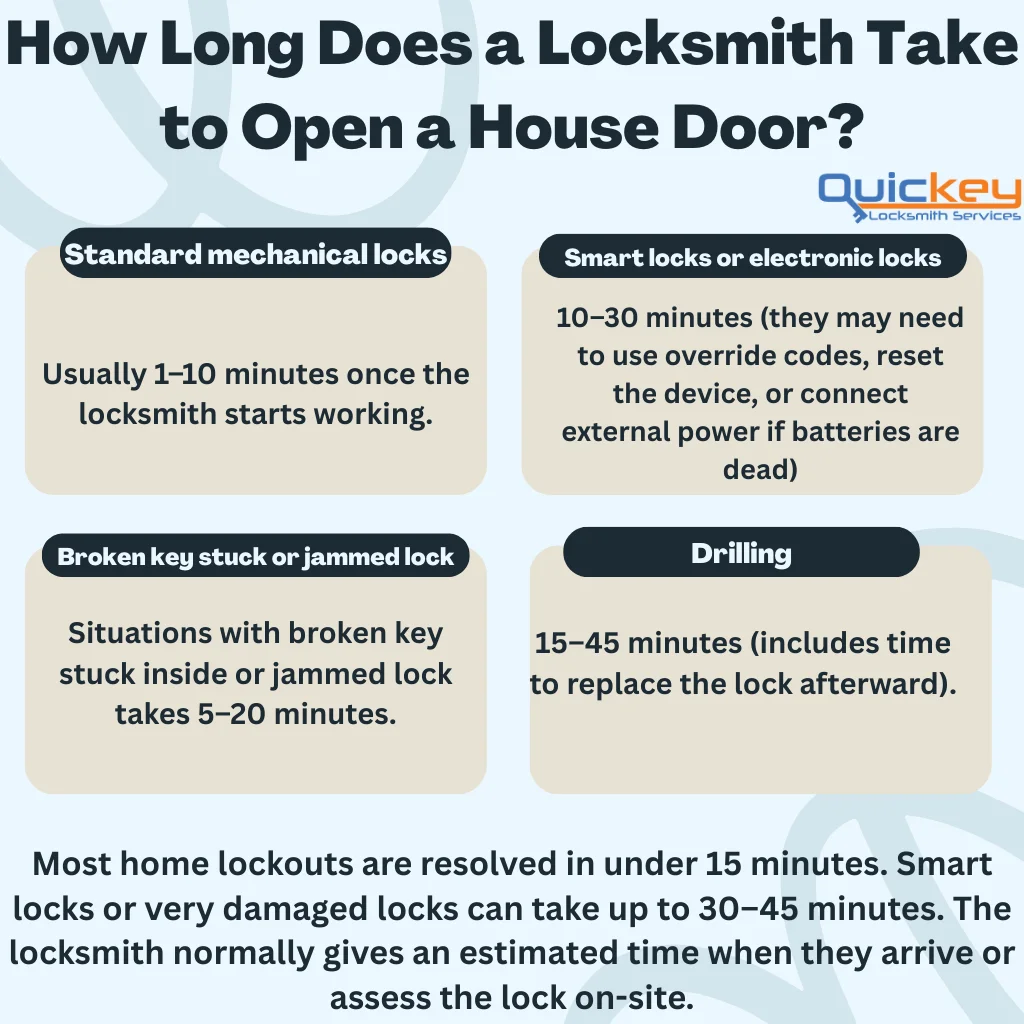
The time a locksmith takes to open a house door depends on the lock type, the situation, and the method used.
Most home lockouts are resolved in under 15 minutes. Smart locks or very damaged locks can take up to 30–45 minutes. The locksmith normally gives an estimated time when they arrive or assess the lock on-site.
A professional locksmith can open almost every common type of door lock used on houses. The success depends on the lock’s design, condition, security level, and age. Below are the main types found on house doors and how locksmiths handle them.
This is the most common type on front doors, back doors, and interior doors. Locksmiths open them easily with lock picking, bump keys, or impressioning. Non-destructive entry works in nearly all cases.
Single-cylinder or double-cylinder deadbolts provide strong security on exterior doors. Locksmiths open them using picking or special tools. They usually take a bit longer than simple locks but open without damage in most situations.
Round doorknob locks (common on interior doors and some older exterior doors). Bypass techniques (using a shim or card to push the latch back) work very fast. Picking is also simple.
Heavy-duty locks built into the door (found in older homes or high-security doors). Locksmiths open them with picking or specialized tools. These are more complicated but still open non-destructively most of the time.
Keyless or electronic locks (such as Schlage, Yale, August, Kwikset) are common in modern homes. If the lock has a backup keyhole, the locksmith treats it like a regular cylinder and uses picking or bump key methods. For fully keyless models, they use override codes, master reset, external power (USB port or battery contacts if batteries are dead), or disassembly. These locks usually take 10–30 minutes or more and may cost more due to electronic parts.
Anti-pick, anti-drill, restricted keyway, or side-bar locks (Mul-T-Lock, Medeco, Assa Abloy, etc.). Locksmiths use special decoding tools or manufacturer-specific methods. In rare cases, drilling is needed if other methods fail.
Almost every standard house door lock can be opened by a trained locksmith. Only extremely damaged or ultra-proprietary high-security locks might require replacement instead of opening.
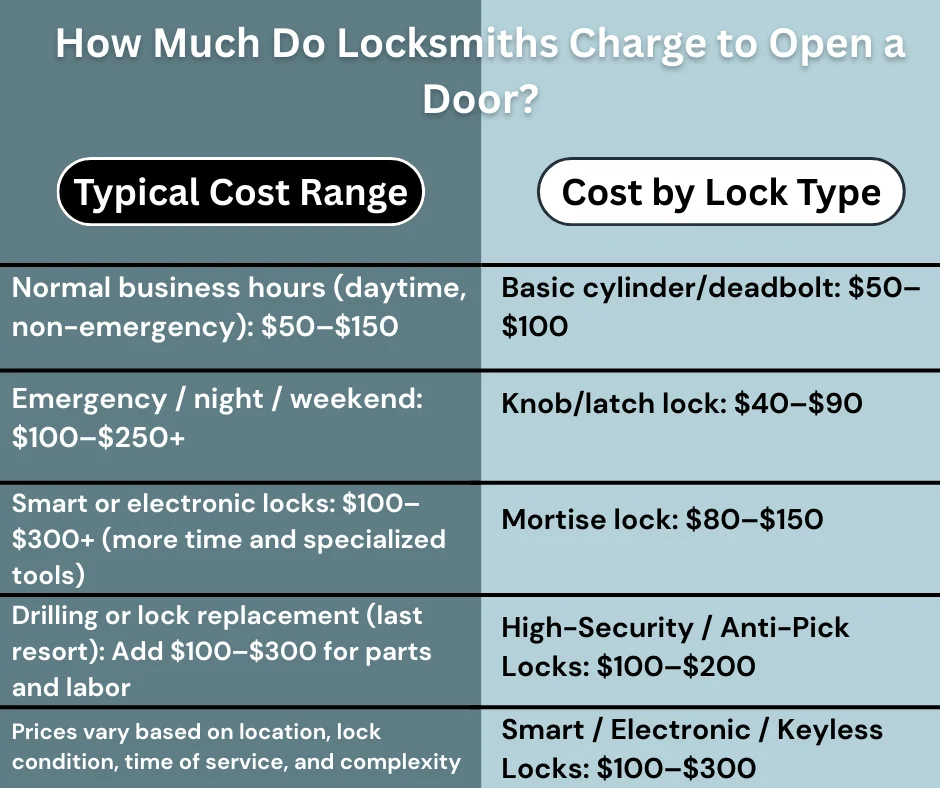
Locksmith charges to open a house door depend on several factors: the time of day (emergency or normal hours), the type of lock, whether any extra work is needed (like key extraction or lock replacement), and the locksmith’s location and policies. Prices are approximate averages based on typical rates in 2026.
Most simple house door lockouts (basic cylinder or deadbolt) fall on the lower end during regular hours. Emergency calls or smart locks push the price higher.
Lock Type
Basic Cylinder / Pin-Tumbler
Deadbolt (single or double cylinder)
Knob / Latch Lock
Mortise Lock
High-Security / Anti-Pick Locks
Smart / Electronic / Keyless Locks
Average Cost Range
$50–$100
$60–$120
$40–$90
$80–$150
$100–$200
$100–$300
Notes
Most common house doors. Usually the lowest cost.
Slightly more time if double-sided
Bypass method fast. Low cost.
Built-in heavy-duty. More complex.
Special tools needed. Higher fee.
Extra time for reset or power supply. Usually the highest cost.
Calling a locksmith is straightforward. Here’s what usually happens step by step when you need a house door opened.
You explain the situation: locked out, key lost, broken key inside, or lock jammed. Give your location and describe the lock if you can (normal door knob, deadbolt, smart lock, etc.).
They will ask for proof that it’s your house (like your name matching the address, CNIC/utility bill details, or neighbor confirmation). This is standard to avoid helping the wrong person.
Over the phone, they tell you the approximate cost based on what you describe (normal hours or emergency, lock type). Prices can change if the situation is different on arrival, but good locksmiths give honest upfront quotes.
Normal hours: 15–60 minutes. Emergency/night: 20–90 minutes (depends on traffic and their location). They usually tell you an ETA when you call.
The locksmith arrives, checks the lock, explains the method (picking, bypass, etc.), and confirms the price again. They start work only after you agree
Pay after the door is open. Cash, card, or mobile payment – most accept multiple ways.
You get back inside. If the lock is damaged or you want a new key, they can do that too (extra cost).
The whole process is usually fast and safe when you choose a reputable locksmith. Always save their number for emergencies.
No. Locksmiths can open most standard house doors (cylinder, deadbolt, knob, mortise, smart locks) without damage. But high-security, ultra-damaged, or special proprietary locks may need drilling or full replacement.
First, check for a spare key with a neighbor or any open window/back door. If it’s a simple knob lock (spring latch), slide a thin plastic card between the door and frame to push the latch back while turning the knob. This works on many interior or older doors but not on deadbolts.
Never force it with a screwdriver, kick, or tools. You will damage the lock or door and make the repair much more expensive. The safest and fastest way is to call a professional locksmith. They open most doors in 5–15 minutes without any damage using proper tools.
Related Services
Related Blogs