When you need to secure your property, you don’t always need to buy or replace locks. Lock rekeying is a faster and cost-effective solution that changes your keys while keeping your existing door handles and deadbolts by updating only the internal parts.
To give you an immediate answer, a complete professional lock rekeying job typically ranges from $75 to $250+ total. This total cost is a combination of two mandatory charges: a locksmith’s flat Service Call Fee and the specific Labor Fee per cylinder.
What this blog covers:
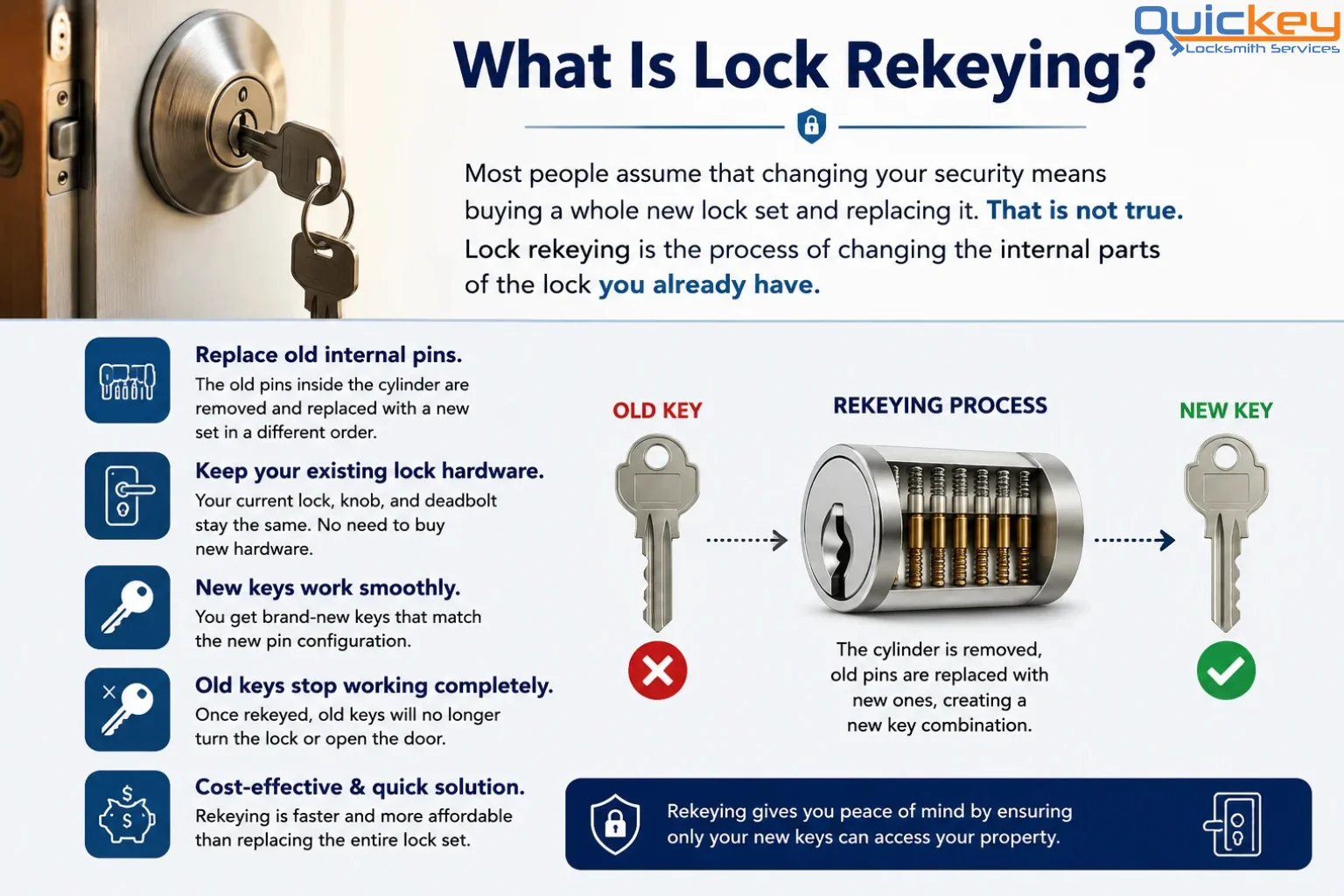
Most people assume that changing your security means buying a whole new lock set and replacing it. That is not true. Lock rekeying is the process of changing the internal parts of the lock you already have. Your outside door knob, handle, and deadbolt face remain exactly the same, but the old keys stop working completely.
Inside every standard lock, there is a small round barrel called a cylinder. This cylinder houses a set of tiny, loose metal pins of different lengths. When you push your key inside, the ridges on the key lift these pins to a perfect straight row. This row allows the cylinder to turn freely and unlock your door. If someone tries to use an old or wrong key, the pins stay scrambled, and the lock refuses to budge.
When a locksmith rekeys your door, they pop this cylinder out, discard the old pins, and drop in a fresh set with a completely different sequence. Because the internal pattern has changed, your old key will never turn that lock again. The locksmith then gives you a brand-new key cut for the new setup. It is a quick and cost-effective way to secure your door without spending money on new metal hardware.
Locksmith prices online can be very confusing. Some sites tell you one price on the phone but change it when they arrive at your house. To keep things completely honest and simple, a real locksmith project always has two main costs: the fee for the driving trip and the fee for the actual lock work.
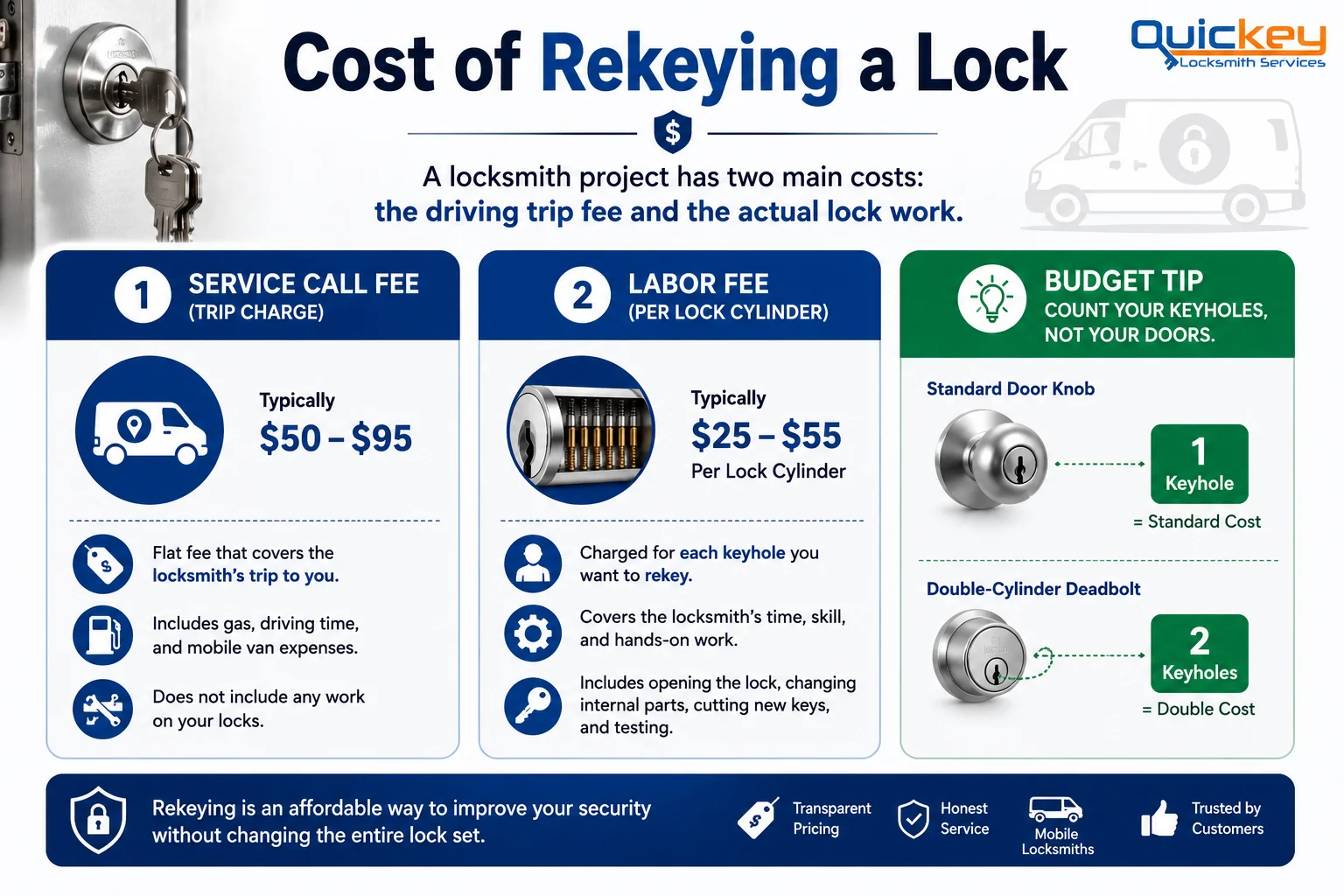
First, you have the Service Call Fee. This is also called a trip charge, and it usually costs between $50 and $95. This flat price does not pay for the work on your doors. It only pays for the locksmith’s gas, driving time, and bringing all their heavy tools in a mobile van straight to your driveway.
Second, you pay the Labor Fee per lock cylinder. This means every keyhole you want to change will typically cost between $25 and $55. Remember, you are not really paying for the small internal pins themselves. Their cost is minimal compared to the overall job. Most of what you pay covers the locksmith’s time, skill, and hands-on work to open the lock core, reconfigure the internal components, cut new keys, and test everything before the job is complete.
Before you check the chart below, please know that all prices shown are total project costs. This means they already include the service call fee, labor, and basic on-site work required to complete the job.
These are typical market ranges, so the final price may be slightly lower or higher depending on lock type, timing, and service conditions. However, most local locksmiths usually charge within these brackets.
We have broken the pricing into Residential, Commercial, and Automotive categories for different locations so you can easily compare costs and understand what applies to your situation.
Location
USA Average
Houston
Katy
The Woodlands
Residential Cost
$90 – $160
$75 – $150
$80 – $160
$90 – $170
Commercial Cost
$120 – $250
$110 – $230
$120 – $240
$130 – $260
Automotive Cost
$90 – $180
$85 – $170
$90 – $180
$100 – $190
A professional locksmith can open almost every common type of door lock used on houses. The success depends on the lock’s design, condition, security level, and age. Below are the main types found on house doors and how locksmiths handle them.
If you still have a working key, the locksmith can easily remove and rekey the lock cylinder. However, if the key is completely lost, the technician may need to pick or decode the lock first before rekeying it safely.
Standard residential locks are usually quick and simple to rekey. However, high-security commercial cylinders or heavy-duty locking systems are much more advanced and require extra precision to reconfigure.
Standard appointments during normal business hours follow regular pricing. However, late-night, weekend, or holiday emergency calls may require special scheduling for the mobile locksmith.
The total cost depends on the type of rekeying service required. Residential locks are usually quick and simple to rekey. However, commercial systems and automotive locks require more time, tools, and careful disassembly.
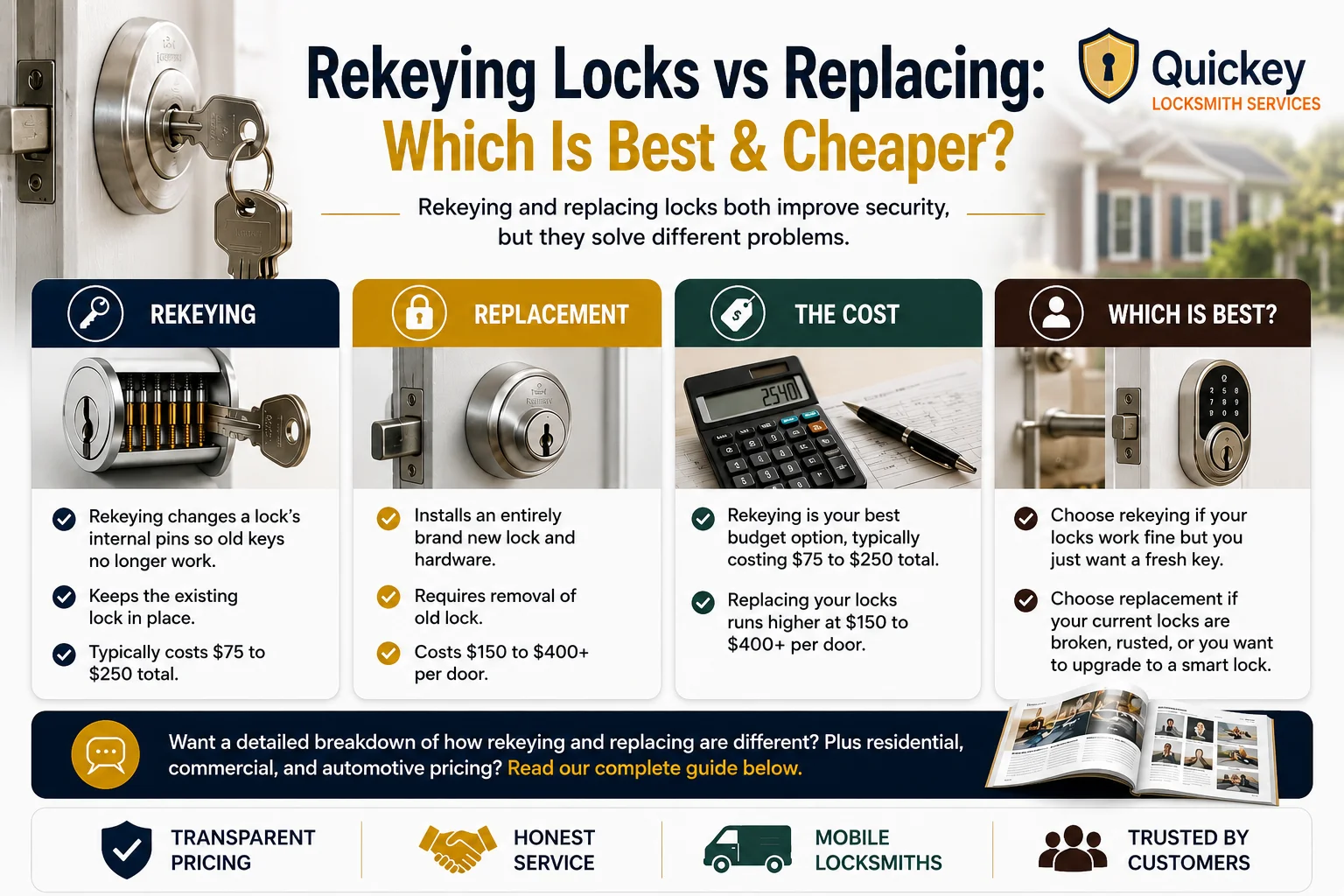
Neither option is automatically better. The right choice depends on the condition of your existing lock, your security goals, and your budget.
If your current lock is working properly and you only want old keys to stop working, rekeying is often the most cost-effective solution. However, if the lock is damaged, outdated, or you want completely new hardware, replacement may be the better option.
For a detailed comparison of costs, security benefits, and when to choose each option, see our complete guide on Rekeying vs. Lock Replacement.
Yes, many standard residential locks can be rekeyed with the correct tools and a compatible rekeying kit. However, the process requires precision, and a small mistake can prevent the lock from working properly. Many homeowners choose a professional locksmith to ensure the job is done correctly.
No, not all locks can be rekeyed. Most standard residential and many commercial locks can be rekeyed easily, but high-security systems, smart locks, or damaged locks may not be compatible and might need repair or replacement instead.
Most standard locks take around 15 to 30 minutes to rekey. The time may vary depending on the lock type, number of cylinders, and overall condition of the lock.
Related Services
Related Blogs